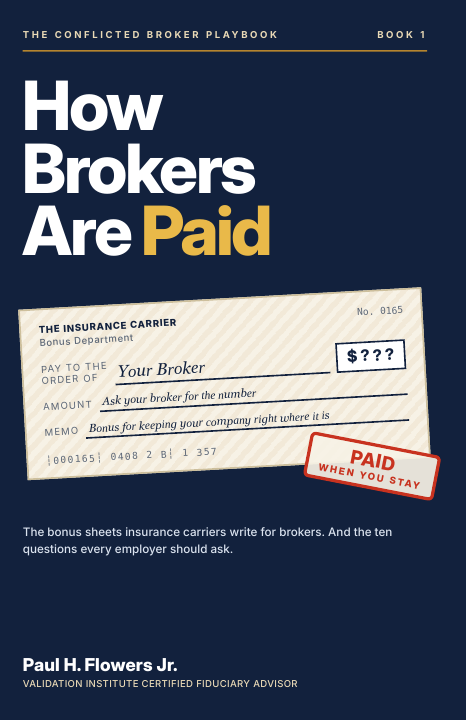
Book 1 · Paul H. Flowers Jr.
How Brokers Are Paid
Follow the money behind broker compensation and discover the questions worth asking.
Purchase on Amazon ↗Employer advisory note
Employers should know when broker compensation includes commissions, points, rewards, retention programs, new-sale bonuses, or carrier-paid incentives.
The Conflicted Broker Playbook
Explore the public records and health-plan economics with Paul H. Flowers Jr. Read both books online in Superior’s Reading Room, or purchase a copy on Amazon.
Book 1 · Paul H. Flowers Jr.
Follow the money behind broker compensation and discover the questions worth asking.
Purchase on Amazon ↗
Book 2 · Paul H. Flowers Jr.
See what is inside your company’s health plan, who gets paid, and how to rebuild it.
Read Breaking Open the Black Box now
Purchase on Amazon ↗Carrier-paid compensation is not always illegal and not always hidden. The problem starts when executives make renewal decisions without a written view of every compensation stream that could influence the advice they receive.
Superior's position is simple: every employer should ask for written compensation disclosure before the renewal decision, not after the increase arrives.